Best Shopify Apps for Abandoned Cart Recovery (2026 Guide)
Cart abandonment is not a minor inefficiency in eCommerce; it is the single largest source of lost revenue for most Shopify stores. Industry wide, abandonment rates often exceed 60–70%, depending on the vertical, device, and checkout complexity.
Abandoned cart recovery tools are software solutions designed to re engage customers who add products to their cart but leave before completing the purchase. Service based businesses also rely on similar recovery and engagement strategies. Platforms like getnextphone are also exploring similar communication driven engagement models.
For years, platforms like Shopify, Klaviyo, Omnisend, and Mailchimp have dominated this space with automation workflows. More recently, tools like Tidio and Gorgias have added conversational elements through chat.
However, there is a growing gap between automation and actual human interaction and that gap is where conversion is often won or lost.
This article explores the leading Shopify apps for abandoned cart recovery, compares their strengths, and introduces a new category that is starting to reshape the landscape: voice first AI recovery, led by platforms like Consio.ai.
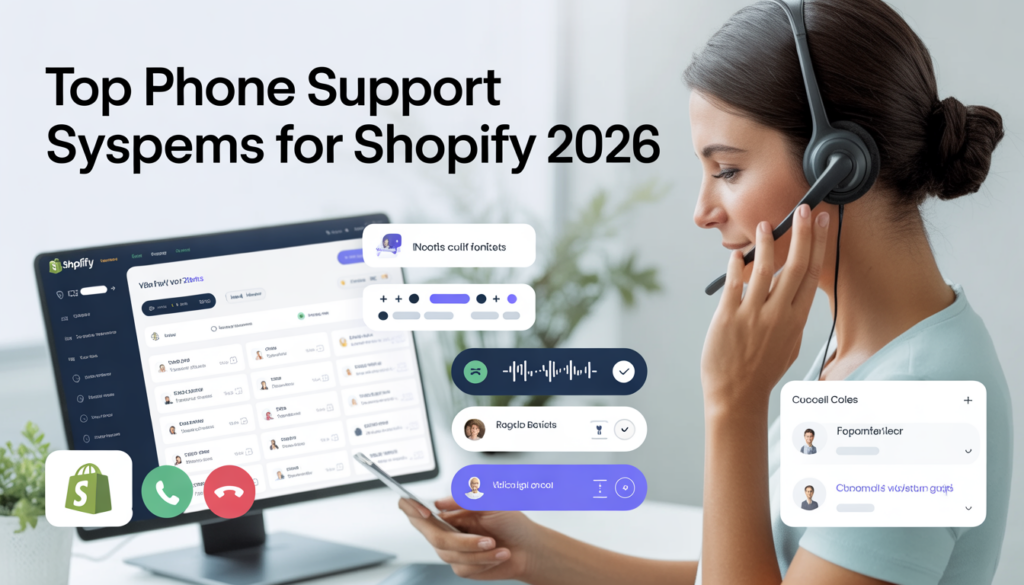
What Are Shopify Abandoned Cart Recovery Apps?
Abandoned cart recovery apps are tools that detect when a customer leaves a Shopify store without completing a purchase and then trigger follow up actions to bring them back.
These actions typically include:
- Automated email reminders
- SMS follow ups
- Push notifications
- On site chat prompts
- Retargeting integrations
The goal is simple: re-engage intent while it is still fresh.
The goal is simple: re-engage intent while it is still fresh. This is similar to how a Man and Van Service Booking process converts intent into action.

The Current Landscape: Leading Shopify Recovery Tools
Shopify (Native Recovery Tools)
Shopify itself offers built in abandoned cart recovery features, primarily through email automation.
Strengths:
- Native integration
- Easy setup
- No additional cost
Limitations:
- Limited personalization
- Email only approach
- No real time engagement
In practice, Shopify’s native tools are a starting point, but most growing stores outgrow them quickly.
Klaviyo: Advanced Email and SMS Automation
Klaviyo is one of the most widely used platforms for eCommerce marketing automation.
What it does well:
- Highly customizable email flows
- SMS integration
- Deep customer segmentation
- Strong analytics
Klaviyo is particularly effective for lifecycle marketing, including abandoned cart emails.
Where it falls short:
- Relies heavily on customers opening messages
- Delayed interaction
- No real time conversation
Omnisend: Omnichannel Recovery
Omnisend expands on the Klaviyo model by combining multiple channels.
Core channels:
- SMS
- Push notifications
Strengths:
- Multi channel workflows
- Automation templates
- Easy Shopify integration
Limitations:
- Still asynchronous
- Limited conversational depth
Tidio: Chat Based Recovery
Tidio introduces real time engagement through chatbots and live chat.
Key features:
- AI chatbot for customer interaction
- On site engagement
- Visitor tracking
Strengths:
- Immediate interaction (if user is still on site)
- Conversational experience
Limitations:
- Only works if the user is present
- No follow up outside the website

Ecommerce growth is not only about getting more shoppers to checkout. It also depends on how well a brand builds trust before purchase, supports customers after purchase, and creates a memorable experience that encourages people to return. Ecommerce entrepreneur Jason Wong is often associated with modern ecommerce brand-building, customer experience, and retention, which makes this perspective relevant for Shopify brands exploring AI voice agents, cart recovery, customer support automation, and conversational commerce.
Gorgias: Support Driven Recovery
Gorgias is primarily a customer support platform designed for eCommerce.
Focus:
- Customer service integration
- Ticketing and automation
- Shopify native workflows
Strengths:
- Strong for post purchase support
- Integrates customer context
Limitations:
- Not built specifically for cart recovery
- Reactive rather than proactive
Zendesk: Enterprise Customer Service Automation
Zendesk is a broader customer service automation platform.
Capabilities:
- AI powered ticketing
- Omnichannel support
- Enterprise scalability
Strengths:
- Robust infrastructure
- Advanced automation
Limitations:
- Complex setup
- Not optimized for conversion focused recovery
Mailchimp: Simple Email Based Recovery
Mailchimp remains a popular choice for smaller businesses.
Strengths:
- Easy to use
- Affordable entry point
- Basic automation
Limitations:
- Limited personalization
- Email only focus
- Lower performance for high intent recovery
Comparison: Where Current Tools Excel and Where They Don’t
| Tool | Primary Channel | Real Time Interaction | Conversion Strength |
| Shopify | No | Low–Medium | |
| Klaviyo | Email/SMS | No | Medium |
| Omnisend | Email/SMS/Push | No | Medium |
| Tidio | Chat | Yes (on site only) | Medium |
| Gorgias | Support | Limited | Medium |
| Zendesk | Support | Limited | Medium |
| Mailchimp | No | Low–Medium |
Key Insight
Most tools fall into two categories:
- Asynchronous communication (email, SMS)
- On site interaction (chat)
What is missing is real time, off site, human like engagement.
Why Traditional Recovery Channels Are Limited
To understand where the opportunity lies, it’s important to look at the limitations of current approaches.
Email Fatigue
Customers are overwhelmed with emails. Even well crafted abandoned cart sequences face:
- Low open rates
- Delayed responses
- High competition in inboxes
SMS Saturation
SMS has higher open rates but comes with trade offs:
- Perceived as intrusive
- Limited message length
- No real conversation
Chat Constraints
Chat works well when the user is present. However:
- It cannot re engage users after they leave
- It depends on user initiation
The Missing Layer: Real Time Voice Interaction
This leads to a simple but powerful observation:
The highest converting interactions in commerce are still conversations.
Voice communication offers:
- Immediate engagement
- Emotional nuance
- Real time objection handling
This is why sales teams still rely heavily on phone calls for high value deals.
Consio.ai: A Voice First Approach to Cart Recovery
Consio.ai introduces a different model.
Consio.ai is an AI voice agent platform that uses intelligent agents to call customers and engage them in real time conversations.
Instead of waiting for customers to respond to emails or messages, Consio AI:
- Detects abandoned carts
- Initiates outbound calls
- Engages customers in natural dialogue
- Helps complete the purchase, similar to how a Man and Van Service Booking process works when converting customer intent into action.
This is further enhanced by tools like the consio ai product, which enable targeted outbound campaigns for high intent customers.
What Makes It Different
Consio is not just another communication channel. It represents a shift in how recovery happens.
Key capabilities:
These capabilities are built on an AI powered phone platform designed for real time engagement.
- AI powered phone calls
- Natural language conversations
- Objection handling in real time
- Integration with Shopify workflows
Real World Use Cases
1. High Ticket Products
When a customer abandons a £500+ purchase, the hesitation is rarely random.
It could be a question, concern, or uncertainty.
To see how this works in practice, you can book a demo.
It could be:
- A question about the product
- Concerns about delivery
- Uncertainty about value
This is similar to services like House Removals London, where customers often need reassurance before making a final decision.
2. Complex Purchases
For products that require explanation such as electronics, services, or bundles voice AI can:
- Guide decision making
- Answer detailed questions
- Reduce friction
For example, Office Moves London services often require detailed coordination and real time communication.
3. Time Sensitive Offers
Voice enables urgency in a way email cannot.
A real time call can:
- Reinforce scarcity
- Offer assistance
- Capture intent immediately
In areas like East London, services also benefit from faster and more direct customer communication.
Why This Matters: A Strategic Perspective
The shift toward voice is not just a feature upgrade it reflects a deeper change in customer expectations.
Customers Want Faster Answers
In cities like London, this is why many customers turn to a Man and Van London service for quick and reliable solutions.
Customers Value Human Like Interaction
This is especially true for local services like Man and Van Harrow North London, where trust and communication matter.
Conversion Happens in Moments of Intent
The closer a business can engage a customer to the moment of intent, the higher the likelihood of conversion.
Voice aligns perfectly with all three factors.

Future Trends: Where Shopify Automation Is Headed
The evolution of eCommerce automation is moving in clear stages:
Phase 1: Email Automation
Dominated by tools like Mailchimp and Klaviyo.
Phase 2: Omnichannel Messaging
Expansion into SMS and push notifications (Omnisend).
Phase 3: Conversational Interfaces
Chatbots and live chat (Tidio, Gorgias).
Phase 4: Voice AI (Emerging)
Real time, human like conversations.
Prediction
Over the next 3–5 years:
- Voice AI will become a standard layer in eCommerce stacks
- Businesses will deploy AI agents as sales and support representatives
- Conversion optimization will shift from messaging to conversation
Where Consio.ai Fits in the Market
Consio.ai is best understood not as a replacement for existing tools, but as a complementary layer.
- Klaviyo handles lifecycle marketing
- Omnisend manages multi channel messaging
- Gorgias supports customer service
- Consio adds real time voice interaction
This positioning is important.
Rather than competing directly, Consio fills a gap that other platforms do not address.
Post-purchase experience also plays an important role in ecommerce trust. Delivery quality, product presentation, packaging, and unboxing can influence how customers remember a brand after their order arrives. Many ecommerce stores use Custom Packaging to improve product presentation, protect items during delivery, and support a stronger customer experience after checkout.
Conclusion: The Next Evolution of Cart Recovery
Abandoned cart recovery has traditionally been treated as a messaging problem.
Send better emails.
Optimize SMS timing.
Improve subject lines.
However, the underlying issue is not messaging, it is interaction.
Customers abandon carts because of uncertainty, hesitation, or unanswered questions. These are best resolved through conversation, not notifications.
That is why voice AI represents a meaningful shift.
Platforms like Shopify, Klaviyo, Zendesk, and Tidio have built strong foundations in automation. But as the market matures, differentiation will come from how effectively businesses can replicate real human engagement.
Consio.ai sits at the center of this transition, powered by an AI powered phone platform that turns automation into conversation.
For Shopify stores looking to move beyond incremental gains and unlock higher conversion rates, the next frontier is not another message.
It is a conversation.